




How to Select the Ideal Privacy Screen Mesh Density for High-Wind Coastal and Commercial Balconies
Release time: 2026-09-10
Table of Contents
Architects, commercial property managers, and outdoor living contractors face a constant design paradox: how to deliver absolute visual privacy for high-rise balconies and coastal resorts without creating a massive wind sail that tears down railings or structural supports during storms.
Whether designing luxury oceanfront condominiums, outdoor restaurant terraces, or commercial hospitality spaces, installing an unvetted enclosure in a high-wind zone can lead to structural failure, costly liability, and frequent product replacements. The key to solving this engineering challenge lies in calculating the exact balance between density, airflow porosity, and physical tensile strength.
Selecting the wrong privacy screen mesh isn’t just an aesthetic mistake—it is a structural calculation error. This comprehensive guide breaks down the fluid dynamics, material standards, and anchoring mechanics necessary to select the perfect fabric specification for coastal and elevated environments.
1. Understanding the Physics: Wind Load vs. Privacy Density
To select the right architectural fabric, one must first understand what happens when coastal wind hits a porous synthetic barrier.
When high-velocity airflow strikes a solid or ultra-dense barrier, it cannot pass through. Instead, the air converts kinetic energy into static pressure against the surface. This creates a severe aerodynamic phenomenon known as drag force. On a 10th-floor coastal balcony experiencing a 50-knot wind gust, an overly dense screen acts like a ship’s sail, transferring thousands of pounds of pressure onto anchor points, posts, and balcony balustrades.
Conversely, a properly engineered privacy screen mesh features micro-openings throughout its weave pattern. Rather than stopping the wind entirely, these apertures break up large wind streams into small, low-velocity micro-vortices. This pass-through effect dramatically reduces wind load pressure while maintaining visual opacity from a distance.
Aerodynamic Comparison in Coastal Environments
- Closed / High Density Options (85%–98% Blockage):
- Airflow Dynamics: High wind resistance and concentrated drag force.
- Structural Impact: Elevated strain on mounting hardware; high risk of railing flexure or fatigue failure over time.
- Risk Profile: High structural risk during coastal gale events.
- Engineered Porous Mesh Options (70%–80% Blockage):
- Airflow Dynamics: Generates micro-vortices for controlled airflow pass-through.
- Structural Impact: Significantly reduced mechanical pressure on posts, anchors, and hems.
- Risk Profile: Optimal coastal balance, providing security and high privacy.
2. Decoding Mesh Specifications: GSM, Shading Rate, and Openness Factor
When reviewing manufacturer spec sheets, procurement teams must look past marketing terms like “heavy duty” and evaluate three standardized material metrics:
- GSM (Grams per Square Meter): Measures raw fabric mass and yarn density. Higher GSM indicates a thicker thread profile and superior tear resistance under severe weather conditions.
- Blockage Rate (%): Defines visual opacity or privacy percentage—the proportion of direct light and line-of-sight obstructed by the weave.
- Openness Factor (%): Measures the airflow aperture and porosity proportion. It is the direct mathematical inverse of the blockage rate and serves as the most critical number for wind load safety calculations.
Grams per Square Meter (GSM) Details
High-quality coastal screens typically range from 150 GSM to 300+ GSM. Selecting a material near or above 200 GSM ensures that the physical yarn can withstand years of continuous wind vibration and salt spray without fraying or stretching out of shape.
Visual Blockage Rate (%) Details
This percentage defines how much light and direct line-of-sight the fabric obstructs. An 80% blockage screen blocks 80% of visual light, leaving a 20% open aperture structure for continuous air diffusion.
Openness Factor (OF) Details
In high-wind zones, the Openness Factor determines how efficiently static wind pressure dissipates. Even a modest 15% to 20% openness factor can reduce structural wind loads by more than 40% compared to a solid, non-porous vinyl tarp.
3. Density Selection Guide for Coastal and Commercial Applications
Not all outdoor spaces require the same balance of airflow and visibility control. Below is a breakdown of how different mesh densities perform under varying environmental stress levels:
| Density Class | Blockage Rate | Openness Factor | Recommended Environment | Wind Load Performance |
| Light Density | 50% – 70% | 30% – 50% | High-rise sky decks, hurricane-prone exposed ridges | Maximum Airflow: Minimal wind drag, low visual privacy |
| Medium Density (Optimal) | 75% – 85% | 15% – 25% | Oceanfront balconies, coastal resorts, elevated dining patios | Balanced: Excellent wind diffusion with high visual privacy |
| Heavy Density | 88% – 95% | 5% – 12% | Sheltered inland courtyards, ground-level privacy fences | High Drag Risk: Must only be installed on reinforced steel frames |
| Complete Blockage | 98%+ / Coated | < 2% | Indoor dividers, fully enclosed weather screens | Severe Sail Effect: Unsuitable for unvented high-wind outdoor applications |
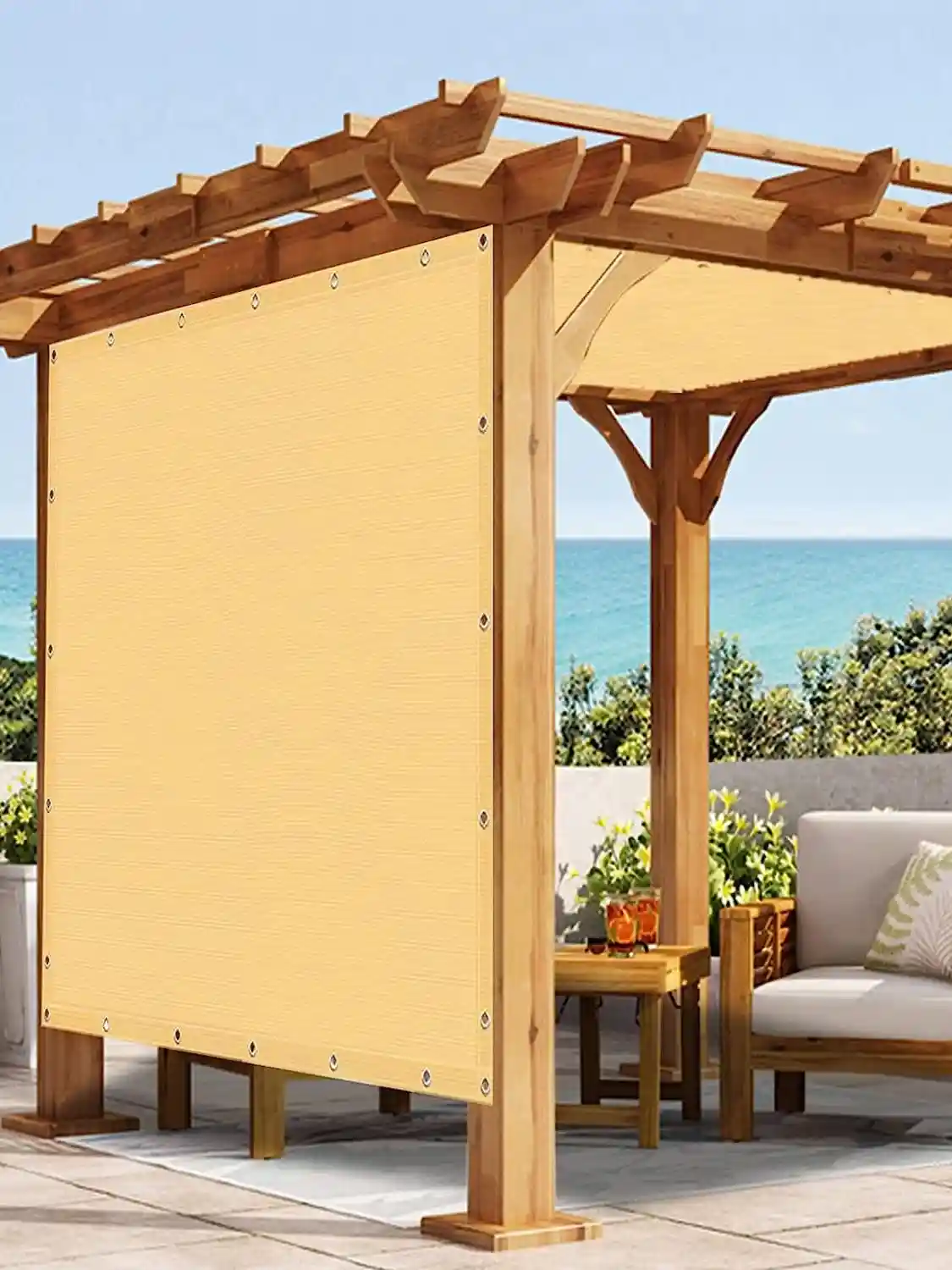
For the vast majority of commercial oceanfront balconies, the 75% to 85% density range represents the engineering sweet spot. It diffuses gale-force gusts into soft breezes while preventing passersby or neighboring buildings from seeing onto the private deck.
4. Material Science: HDPE Monofilament vs. Tape Yarn Construction
Beyond density, the mechanical construction of the yarn determines whether a screen will survive salt spray, UV degradation, and relentless physical flexing.
Virgin High-Density Polyethylene (HDPE)
Commercial-grade outdoor screening must be manufactured using 100% virgin high-density polyethylene shading polymers. Recycled plastics degrade rapidly when exposed to marine salt environments and solar radiation, leading to fiber embrittlement and catastrophic tearing within 12 to 18 months.
Monofilament vs. Tape Yarns
- Tape Yarn (Flat): Flat, ribbon-like strands. While economical and excellent for total shade, flat tape yarns act like small sails when exposed to direct coastal winds, increasing structural stress on the hem and flaring under load.
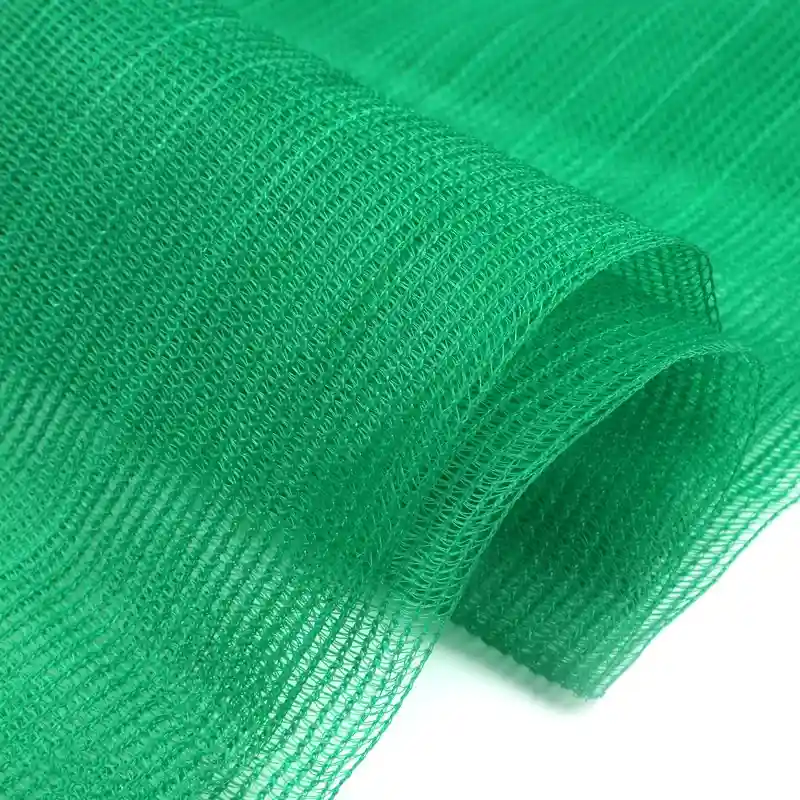
- Monofilament Yarn (Round): Extruded round threads resembling heavy-duty fishing line. Monofilament construction features an aerodynamic round profile that allows wind to glide smoothly around individual strands, providing unmatched tensile strength and superior resistance to wind-driven friction.
Lock-Stitch Raschel Knitting
Unlike woven fabrics that unravel when cut or punctured by flying storm debris, high-grade coastal screens utilize a lock-stitch Raschel knit structure. If a debris impact punctures a lock-stitched mesh, the surrounding loop knots prevent the tear from spreading along the entire length of the balcony screen.
5. Synergistic Architecture: Integrating Balcony Protection with Overhead Netting
In modern commercial hospitality design, balcony wall protection is rarely installed in isolation. To create a fully optimized microclimate for luxury guests, developers frequently integrate vertical perimeter protection with overhead structural shading systems.
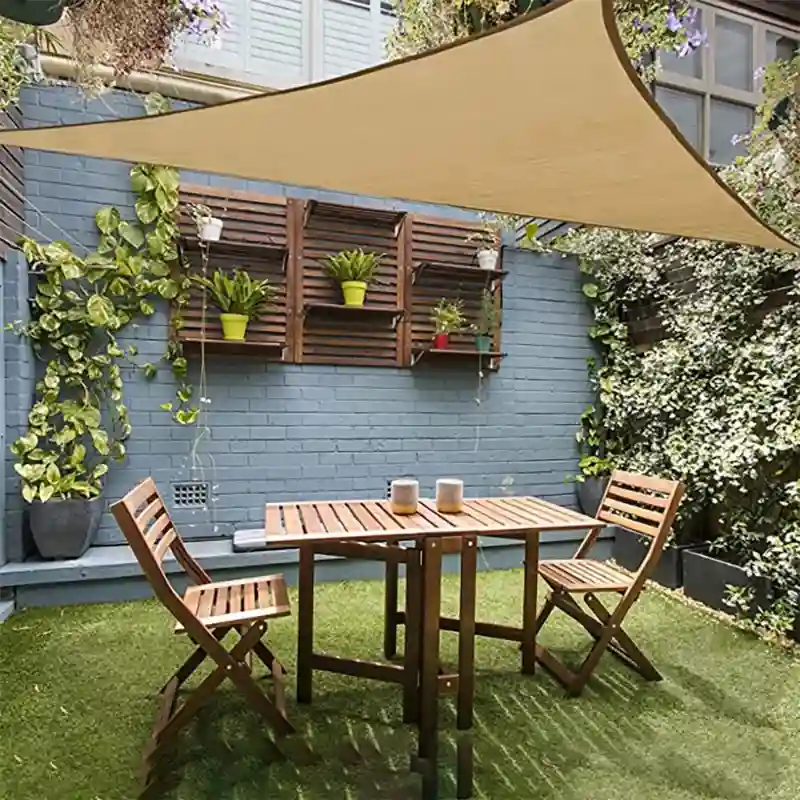
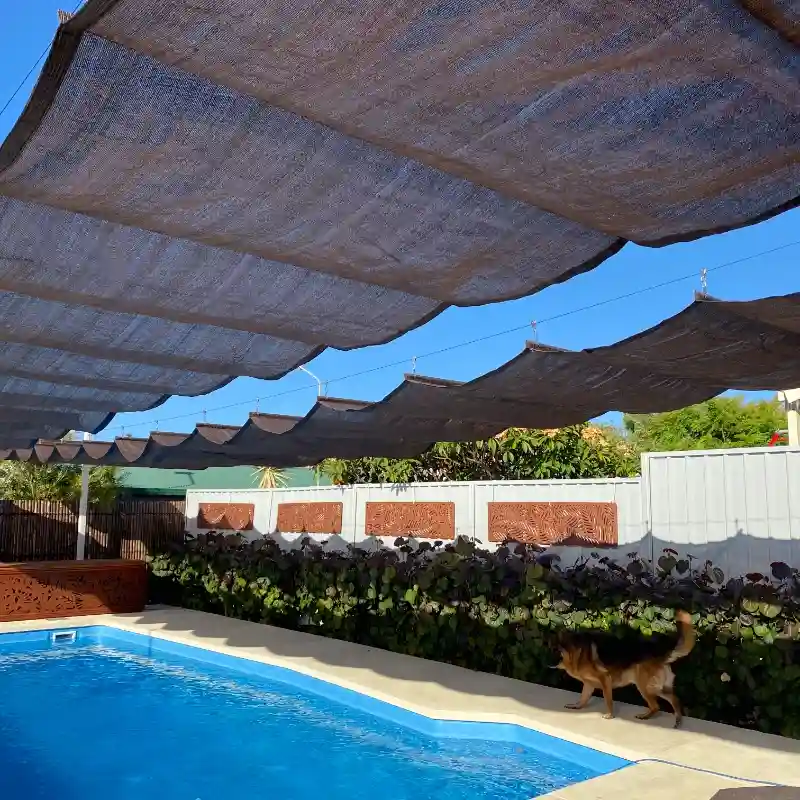
When designing an open-air commercial patio or hotel penthouse, engineers often match vertical wall screens with a heavy-duty commercial shade sail or specialized custom agricultural net overhead.
Using complementary high-performance netting across both horizontal and vertical planes yields major environmental advantages:
- Uniform UV Resistance: Utilizing high-grade high-density polyethylene shading materials across overhead sails and vertical balcony screens prevents uneven sun bleaching and material degradation over time.
- Harmonized Structural Load: By aligning the openness factors of overhead shade sails with vertical wall screens, wind passes smoothly through the entire structure rather than becoming trapped under a solid overhang roof.
- Comprehensive Microclimate Control: Combining vertical balcony wind protection with overhead sun shading lowers ambient balcony surface temperatures by up to 15°C (27°F), significantly reducing air conditioning loads for adjacent interior hotel suites.
6. Structural Installation, Hemming, and Anchoring Best Practices
Even the highest-grade mesh fabric will fail if its installation mechanics are poorly executed. High-wind environments place severe concentrated shear forces on edges, grommets, and fasteners.
Multi-Layer Perimeter Engineering
- Outer Hem Layer: Triple-folded hem boundary crafted to distribute edge tension across a 2-inch wide perimeter strip.
- High-Load Reinforced Core: Includes an internal high-tensile polyester webbing inserted directly inside the folded fabric layer, providing a dense matrix that prevents grommet pull-out under extreme force.
- Inner Stitch Line: Double-stitched using heavy UV-stabilized PTFE (Teflon-based) thread that resists chemical breakdown from salt mist and solar radiation.
- Brass Anchoring Hardware: Heavy-duty, marine-grade brass or 316 stainless steel spur grommets anchored directly through all three reinforced layers.
Reinforced Hemming Standards
Never install raw, single-fold hemmed fabric in a coastal environment. Commercial high-wind installations require a 3-ply folded hem reinforced internally with seatbelt-grade polyester webbing prior to double-stitching. Standard nylon sewing threads degrade under solar exposure within two years; PTFE threads last the entire operational lifespan of the synthetic fabric.
Grommet Spacing and Hardware Selection
- Grommet Material: Use marine-grade solid brass or 316 stainless steel spur grommets. Standard aluminum or nickel-plated grommets corrode rapidly in ocean air and pull free from the fabric.
- Spacing Intervals: In calm environments, grommet spacing every 50cm (20 inches) is acceptable. For high-wind coastal balconies, space grommets every 20cm to 30cm (8 to 12 inches) along all four borders to distribute wind loads evenly.
- Flexibility Fasteners: Secure the screen using heavy-duty UV-stabilized zip ties, stainless steel spring hooks, or elastomeric bungee fasteners. Elastic fasteners absorb sudden kinetic wind shocks, protecting both the fabric hem and the balcony railing from peak load stress.
7. Maintenance, Lifecycle Management, and Safety Protocols
To ensure long-term performance and maintain building fire and safety compliance, commercial facility operators should implement a regular inspection routine:
Bi-Annual Facility Inspection Protocol
- Hardware Integrity Check: Inspect all 316 stainless steel fasteners, turnbuckles, and spring hooks for signs of stress corrosion cracking or loosened tension.
- Hem & Thread Evaluation: Examine perimeter hems for thread fraying, localized fiber stretching, or grommet hole elongation.
- Freshwater Rinsing: Wash fabric surfaces thoroughly using low-pressure fresh water to remove accumulated salt crust build-up.
- Drainage Clearance: Verify that bottom hem clearances remain at least 2 to 3 cm above floor level to allow unimpeded rain water runoff from the balcony deck.
Salt crust accumulation on mesh fibers acts like liquid lenses under direct sunlight, magnifying UV heat exposure and accelerating polymer degradation. Periodically rinsing coastal screens with fresh water prevents salt crystallization and extends the operational lifespan of high-density knitted screens to 8-10+ years.
Elevate Your Building’s Outdoor Performance Today
Selecting the ideal privacy screen mesh for high-wind coastal balconies is a crucial engineering decision that bridges structural safety, occupant comfort, and long-term architectural beauty. By balancing GSM mass, selecting an optimal 75%–85% blockage density, and utilizing marine-grade monofilament HDPE materials, commercial property managers and contractors can create luxurious, wind-diffused outdoor sanctuaries that withstand nature’s harshest elements.
Whether upgrading a boutique coastal resort, specifying high-rise residential balconies, or engineering integrated commercial shading systems, choosing properly density-calibrated technical fabrics ensures your outdoor spaces remain safe, stylish, and comfortable year-round.